Has the US Ever Defaulted on Its Debt? A Look at History, and What It Means Today
 Ask most people whether the United States has ever defaulted on its debt, and the answer will usually be a confident no. The US is often described as the ultimate safe borrower, the issuer of the world's reserve currency and the benchmark against which all other debt is measured.
If we look under the hood, the answer is more complicated. Depending on how you define default, the US has, on more than one occasion, quietly rewritten the rules in its own favor. In a recent episode of the Swiss Money Secrets podcast, Jamie Vrijhof, Urs Droese, and Jess Roberson worked through that history and asked what it means for anyone holding wealth in US dollars today. This article draws on that conversation.
Most people picture a default as a government simply failing to pay what it owes. That kind of outright default is rare for a country that borrows in its own currency, because it can always print more of that currency to meet its obligations. But there is a subtler form. If a government repays its debt in money that is worth substantially less than what was borrowed, or changes the terms after the fact, the creditor still loses. The debt is honored on paper, yet the real value returned is diminished. Viewed through that lens, the history of the US dollar contains several moments worth revisiting.
1933: The gold revaluation
In 1933, in the depths of the Great Depression, President Franklin D. Roosevelt issued an executive order requiring Americans to hand in most of their gold to the Federal Reserve, in exchange for paper dollars at a fixed rate of USD 20.67 per ounce. Once the gold had been collected, the government revalued it to USD 35 per ounce. In practical terms, the dollar was devalued significantly against gold, and citizens who had exchanged their gold at the old rate could not benefit from the new one. For anyone who had lent to the government or held dollars, the purchasing power of what they were owed was reduced by decree.
1971: The Nixon shock and the end of Bretton Woods
After the Second World War, the Bretton Woods system tied the US dollar to gold and other major currencies to the dollar. Foreign governments could, in principle, exchange their dollars for US gold at a fixed rate. This arrangement placed the dollar at the center of the global financial system.
By 1971, the US no longer held enough gold to honor all the dollars in circulation abroad. President Richard Nixon responded by suspending the dollar's convertibility into gold, a decision remembered as the Nixon shock. It ended the Bretton Woods system and severed the dollar's last formal link to gold. Foreign holders who had trusted that their dollars could be redeemed for gold found that the promise had been withdrawn.
Later revaluations and a pattern
The podcast conversation also touched on the further revaluation of gold later in the decade. Across these episodes, a pattern emerges. Rather than defaulting outright, the US repeatedly adjusted the rules governing the dollar, in ways that reduced the real value of its obligations. The debt was always honored in name. The value returned to creditors was another matter.
None of this is a criticism unique to the United States. Governments throughout history have used inflation and currency adjustments to manage debt burdens. The point is simply that the dollar's history is less unchanging than its reputation suggests.
Why this history matters now
The reason to revisit these moments is not nostalgia. It is that the pressures which prompted them are visible again today.
US federal debt has grown to a level many economists consider unsustainable over the long term. It just surpassed $40 trillion. A significant and rising share of the federal budget now goes toward interest payments alone. At the same time, some foreign governments have gradually reduced their holdings of US Treasury securities, a trend that raises questions about who will fund future borrowing and on what terms.
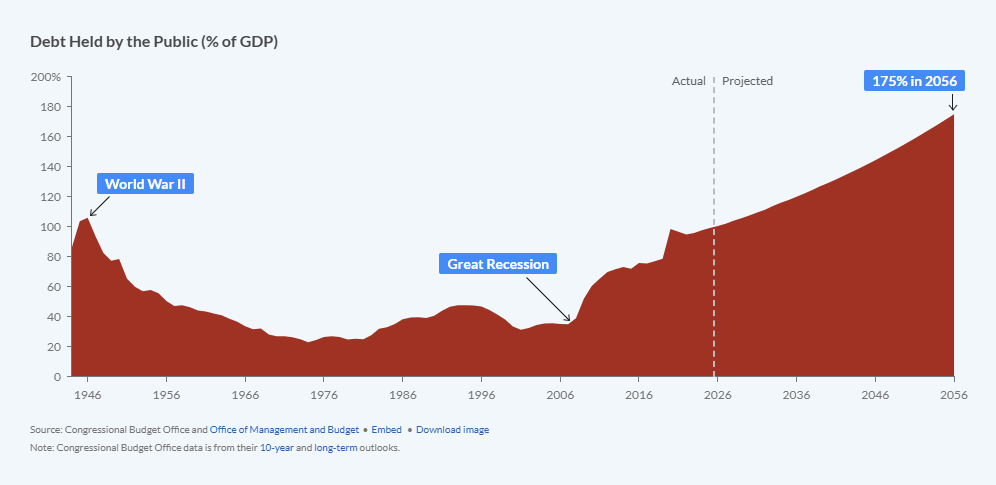
Faced with a heavy debt burden, governments generally have a limited set of options: grow the economy faster than the debt, raise taxes, cut spending, or reduce the real value of the debt through inflation or currency adjustment. History suggests the last of these is often the path of least political resistance.
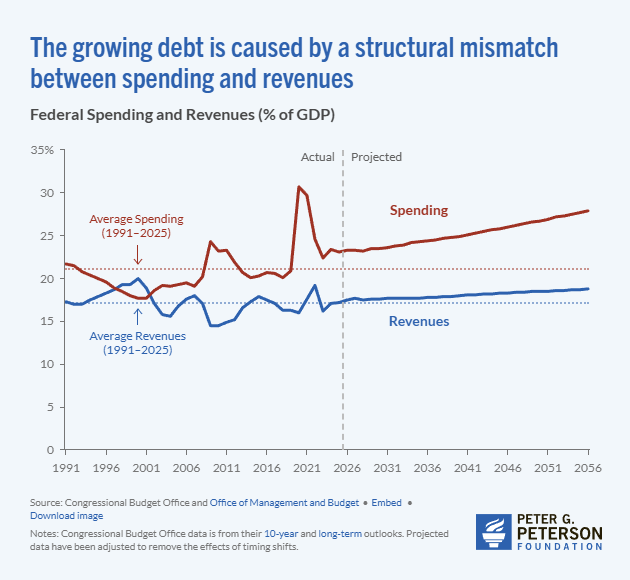
The conversation also looked ahead to newer developments, including the growing role of stable coins backed by Treasury securities, and the possibility of a more multipolar world in which the dollar shares its reserve status with other currencies and assets. Whether or not those scenarios unfold, they point to a financial system in flux rather than one fixed in place.
What it means for internationally minded investors
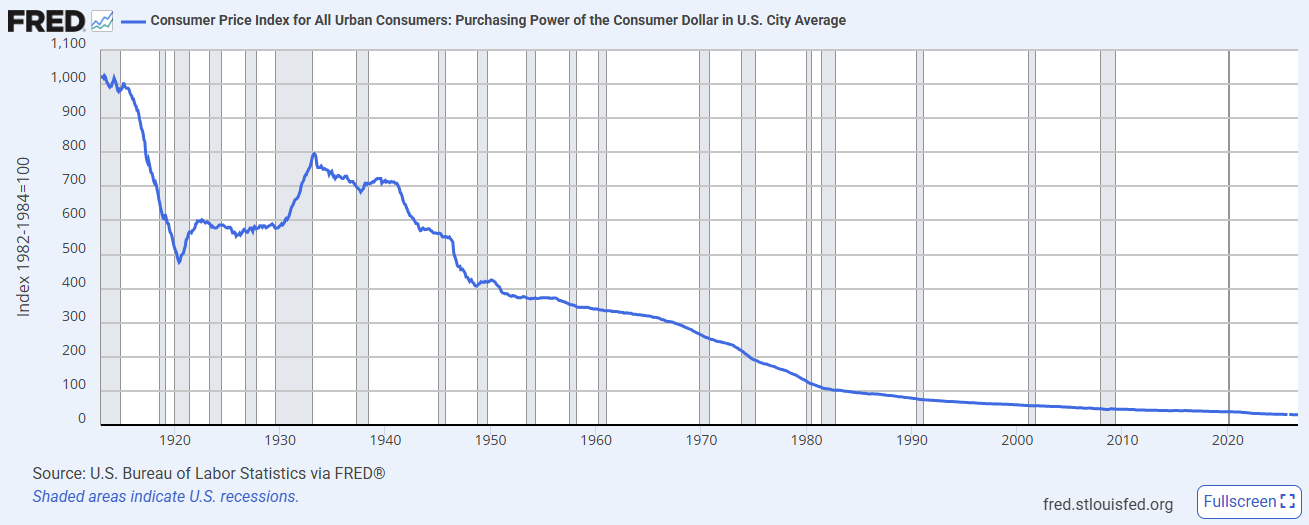
For Americans holding most of their wealth in US dollars, this history carries a practical lesson. The value of a currency, even the world's reserve currency, is not guaranteed to hold over decades and generations. The rules can change, and they have before. This is not a prediction of crisis, and it is not a reason for alarm. US Treasuries remain central to global markets, and the dollar remains dominant. But it is a reminder that concentration in a single currency and a single system carries a risk that is easy to overlook precisely because it feels so familiar. Especially when we look at the purchasing power of the US dollar over the past century.
International diversification, holding assets across different currencies, jurisdictions, and financial systems, is one of the most established tools for addressing that risk. It does not depend on predicting the next monetary shift. It simply reduces how much any single one of them can affect your purchasing power. That principle has been at the center of how Swiss wealth management has served international clients for generations. You can listen to the full conversation on the Swiss Money Secrets podcast, available on YouTube, Spotify, and other major platforms.
At WHVP, we help American clients protect and grow their wealth beyond borders through transparent, compliant, and personalized Swiss wealth management. Schedule a free consultation today to explore how international diversification can strengthen your financial future.
This content is for informational and educational purposes only and does not constitute investment, tax, or legal advice. It reflects our views as of the date of publication and may change without notice. Investing involves risks, including possible loss of principal. WHVP AG is regulated in Switzerland by FINMA and is an SEC-registered investment adviser.